Introduction, What Is a SIM Details Information App.
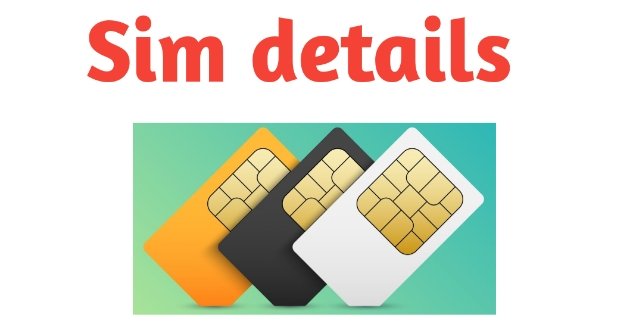
A SIM, or Subscriber Identity Module, is an important part of a mobile communication system. It connects a mobile subscriber with a cellular network and contains information that allows the network to identify and authenticate the subscriber.Because SIM cards are connected with mobile numbers and subscriber registration, many people search online for SIM Details Information Apps that claim to show SIM owner information, CNIC details, network information, or the number of SIMs registered against an identity card.
However, there is an important difference between a legitimate SIM-management application and an unofficial application claiming to provide private telecom information.
A legitimate app may help users manage their own SIMs, identify their network, monitor usage, or access official telecom services. An unofficial “SIM database” application claiming to reveal another person’s complete identity information should be treated with caution.
In Pakistan, SIM registration requires subscriber verification. PTA’s cyber-safety guidance specifically advises people to periodically check the number of SIMs issued in their name and to block illegally issued SIMs.
This educational guide explains what SIM information apps are, their possible features, legitimate uses, security concerns, and the safest ways to check SIM registrations.
What Information Is Associated With a SIM.
A SIM card is associated with several types of technical and subscriber information.
This can include the mobile number, network information, SIM identifiers, subscription information, and registration information maintained by the relevant mobile operator.
Some information is visible directly to the user, while other information is maintained inside the operator’s systems.
For example, your phone may display the mobile network name and phone number, while detailed subscriber-registration information is maintained by the telecom operator.
An ordinary third-party Android application does not automatically have permission to access a telecom operator’s private subscriber database.
This is why users should be skeptical of applications claiming that simply entering a CNIC or phone number will reveal a complete private profile.
SIM Details Information App, Common Features.
Different SIM-related applications provide different features.
Network Information: Some apps can identify the mobile network currently being used by the device. This can be useful when you have multiple SIM cards and want to quickly determine which operator is active.
SIM Card Information: Depending on Android permissions and the device, an application may display certain technical SIM information available through the operating system. The exact information depends on the Android version, device manufacturer, SIM configuration, and permissions granted to the application.
Mobile Number Information: Some phones and applications can display the number associated with a SIM if that information is available to the device. However, this does not mean that an application can retrieve the private identity information of the subscriber.
Dual-SIM Management: Modern Android phones frequently support two SIM cards. A SIM information or management application may help users distinguish between SIM 1 and SIM 2. This can be useful when choosing which SIM should be used for mobile data, calls, and SMS.
Official SIM Registration Checking: The most important legitimate use is checking SIM registrations through an authorized telecom or regulatory service. In Pakistan, PTA’s guidance recommends periodically checking the number of SIMs issued in your name and blocking illegally issued SIMs.
SIM Details App vs SIM Database App.
These two terms are often confused.
A SIM information app may provide technical information about the SIM installed in your own phone.
A SIM database app usually claims to provide information about subscribers based on a phone number or CNIC.
These are very different things.
An application can access certain information exposed by Android without having access to a telecom company’s private customer database.
Therefore, if an application claims to reveal the complete name, address, CNIC, family information, or other private details of any phone-number owner, users should not automatically believe the claim.
Can a SIM Details App Show the Owner’s Name.
This depends on the legitimate data source being used.
A normal Android application should not be assumed to have unrestricted access to telecom subscriber records.
If an app claims that it can enter any mobile number and instantly reveal a person’s full identity, the claim should be treated cautiously.
The information may be outdated, inaccurate, illegally obtained, or completely fabricated.
Users should never rely on an unofficial application as an authoritative source of personal identity information.
Checking SIMs Registered Against Your CNIC.
One of the legitimate reasons for searching for a SIM information service is to check how many SIMs are registered against your own CNIC.
This is particularly useful for security.
For example, you may have used several SIM cards over the years and forgotten about some of them. You may also want to verify that no unauthorized SIM has been registered using your identity information.
PTA’s cyber-crime guidance specifically recommends periodically checking the number of SIMs issued in your name and blocking illegally issued SIMs.
Use official PTA or mobile-operator services for this purpose instead of downloading an unknown database APK.
Why Checking Your SIM Registrations Is Important.
Identity Protection: Your CNIC is sensitive personal information. Unauthorized SIM registrations can create potential security problems, so monitoring registrations associated with your identity is a useful precaution.
Avoiding Unwanted Registrations: You may discover an old or unused SIM that is still associated with your identity. Checking your records allows you to contact the operator and follow the correct procedure for removing or blocking it.
Preventing Misuse: An unauthorized SIM registered using your identity may potentially be misused for fraudulent or abusive activity. Regularly checking your registrations gives you an opportunity to identify problems earlier.
Official Methods Are Better Than Random APKs.
- When searching for a “SIM Details Information APK,” you may find many websites promising access to large SIM databases.
- Do not assume that these applications are official.
- An APK is simply an Android application package. The fact that a file has an
.apkextension does not prove that it is safe, genuine, or authorized. - For sensitive services, always look for an official application or website provided by the relevant telecom operator or government authority.
PTA and SIM Registration in Pakistan.
The Pakistan Telecommunication Authority regulates telecommunications in Pakistan and provides information and systems related to telecom consumers.
PTA’s cyber-safety material explains that SIM issuance requires proper subscriber verification and warns about illegally issued SIMs.
The same guidance recommends that users periodically check SIMs issued in their name and block unauthorized SIMs.
This makes official SIM-registration checking more reliable than random websites advertising “live SIM databases.”
What to Do If You Find an Unknown SIM.
Suppose you check your own CNIC through an authorized service and discover a SIM registration that you do not recognize.
Do not attempt to find the person’s private details through an unofficial database.
Instead, contact the relevant mobile operator.
Explain that the SIM registration is unfamiliar and ask about the current verification and blocking process.
If the matter cannot be resolved by the operator, PTA provides a Complaint Management System through which consumers can submit and manage telecom complaints. The current PTA CMS documentation describes account access using a registered CNIC and password.
Keep any complaint number or official reference provided to you.
SIM Details App, Educational Uses.
SIM-related applications can have legitimate educational and technical uses.
Learning About Mobile Networks: Students can use SIM-management tools to understand how Android devices identify cellular networks.
Understanding Dual-SIM Phones: Users can learn how SIM 1 and SIM 2 are handled by Android.
Checking Device Compatibility: Technical users may use system information to determine which SIM slots, network types, and cellular configurations are supported.
Network Troubleshooting: SIM and network information can sometimes help troubleshoot connection problems. For example, users can determine which SIM is selected for mobile data or whether the device recognizes a particular SIM.
Features Users Should Look For.
If you are selecting a legitimate SIM information application, consider the following features.
Simple Interface: The application should make important information easy to understand.
Dual-SIM Support: If your phone contains two SIM cards, the application should clearly distinguish between them.
Network Identification: The app should accurately identify the mobile operator where Android makes that information available.
Privacy Controls: A trustworthy application should clearly explain what data it collects and why.
Minimal Permissions: The application should not request unnecessary access to your contacts, messages, photos, microphone, or other sensitive information simply to display basic SIM information.
Regular Updates: A well-maintained application should receive updates when Android changes its permissions or APIs.
Why App Permissions Matter.
Before installing any SIM information application, review its requested permissions.
For example, an application claiming to show basic SIM information should not automatically need unrestricted access to every file on your phone.
Be especially careful if an app asks for access to contacts, SMS, accessibility services, device administration, or other sensitive functions without a clear reason.
Android’s permission system exists to give users greater control over what applications can access.
Never grant sensitive permissions simply because an application claims that they are necessary for an “unlimited SIM database.”
Avoid Fake SIM Database Applications.
Some websites use attractive names such as:
- SIM Owner Details APK.
- SIM Database 2026.
- Live SIM Database.
- CNIC SIM Details App.
- All SIM Owner Information.
SIM Tracker APK: These names do not prove that the applications are legitimate. Some may simply display publicly available information. Others may contain outdated databases. Some may ask users to complete surveys or install additional applications. Others may attempt to collect personal information. The safest approach is to avoid applications that promise unauthorized access to private subscriber records.
SIM Tracker Apps, An Important Warning.
The term “SIM tracker” can mean different things.
A legitimate device-management tool may help a user identify whether the SIM in their own phone has changed.
A malicious or invasive application may attempt to monitor another person’s device without permission.
Never install software with the intention of secretly monitoring another person’s phone or location.
For legitimate security purposes, use the device’s built-in security features and authorized family or device-management tools.
Can a SIM App Track a Person’s Location.
A SIM information application should not be assumed to provide a person’s real-time location.
Location information is controlled through device permissions, network systems, and authorized services.
A random APK claiming that you can enter a phone number and see someone’s live location is a major warning sign.
Do not enter sensitive information into such websites or applications.
Can You Find an Address From a Phone Number.
Users may encounter websites claiming to provide a person’s address from a phone number.
Such services should be treated with caution.
A phone number does not automatically give an ordinary application legitimate access to a subscriber’s private address.
If a website claims to reveal sensitive personal information without authorization, do not assume the information is accurate or lawfully obtained.
SIM Information and Privacy.
Privacy should be one of the most important considerations when using SIM-related applications.
A SIM is connected to your mobile identity, so careless handling of SIM-related information can expose you to scams and identity misuse.
Never upload your CNIC photograph to an unknown website.
Never send your verification codes to strangers.
Never share your SIM registration information publicly on social media.
Do not publish your phone number and CNIC together.
How to Choose a Safe SIM Information App.
- Before installing an application, ask several questions.
- Who developed it.
- Where did you download it.
- Is it available through an official app store.
- Does it have a clear privacy policy.
- What permissions does it request.
- Does it explain why those permissions are necessary.
- Does it promise access to information that an ordinary app should not have.
- If the answers are unclear, do not install it.
Google Play vs Third-Party APK.
For ordinary Android applications, Google Play is generally preferable to an unknown APK website.
Google Play provides developer information, application reviews, update mechanisms, and security checks.
However, users should still review the application’s developer and permissions rather than assuming that every application is automatically safe.
Third-party APK files require additional caution because the file may have been modified after being published by the original developer.
For a SIM-related application, this distinction is particularly important because the application may handle sensitive information.
What Makes a SIM App Suspicious.
Be cautious if an application claims:
- “100% live SIM database.”
- “Enter any number and get complete CNIC.”
- “Find anyone’s address.”
- “Track any SIM instantly.”
- “Get all private details.”
- “Government database unlocked.”
- “Unlimited SIM owner information.”
- These claims should not be accepted without strong evidence from an authorized source.
- An ordinary APK cannot simply be assumed to have privileged access to protected telecom databases.
SIM Details for Business Users.
Businesses may have several company-owned SIM cards.
A SIM management application or an official operator portal can help organize legitimate company connections.
Businesses should maintain an internal record of which employee has which company number.
When an employee leaves the organization, the company should follow the operator’s procedure for transferring, suspending, or closing the relevant SIM.
Avoid maintaining sensitive customer or employee CNIC information inside an untrusted third-party application.
SIM Details for Travelers.
Travelers may use multiple SIMs or eSIMs when moving between countries.
A SIM information tool can help distinguish between active subscriptions.
However, users should check roaming charges, network compatibility, and operator settings directly with their mobile provider.
A third-party application is not a replacement for the operator’s official account management system.
SIM Details and eSIM.
Modern smartphones increasingly support eSIM technology.
Unlike a physical SIM card, an eSIM is a digital SIM profile stored within compatible device hardware.
The same principles apply to eSIM privacy.
Users should only activate eSIM profiles from trusted operators and should protect activation QR codes.
Never upload an eSIM activation QR code to a public website.
What If Your SIM Is Lost.
If your SIM is lost or stolen, contact your mobile operator as soon as possible.
Request that the SIM be blocked according to the operator’s current procedure.
If necessary, obtain a replacement SIM through the official verification process.
Do not wait for an unknown person to use the SIM before taking action.
If the lost SIM was connected to banking, email, social media, or other important accounts, review your account-security settings as well.
SIM Details and Banking Security.
Mobile numbers are often connected to banking services and other important accounts.
For this reason, unauthorized SIM activity can become a security concern.
Never share an OTP or verification code with another person.
If you suddenly lose cellular service without an obvious reason, contact your operator and check whether your SIM has been replaced, blocked, or otherwise affected.
Also contact your bank if you suspect that someone may have attempted to take control of your mobile number.
SIM Information App, Common Myths.
Myth, Every SIM App Can Access the PTA Database: False. An ordinary Android application does not automatically receive access to protected telecom databases.
Myth, A Phone Number Reveals a Person’s Complete Identity: Not necessarily. Private subscriber information is maintained by authorized entities and should not be assumed to be publicly accessible.
Myth, A VPN Unlocks SIM Databases: False. A VPN changes network routing. It does not provide authorization to access private telecom records.
Myth, Every APK Called “SIM Database” Is Official: False. An APK’s name does not establish its authenticity.
Frequently Asked Questions, SIM Details Information App.
What is a SIM Details Information App: It is a general term for an application that provides information about SIM cards, mobile networks, or SIM-related services.
Can a SIM app show my own SIM information: Some legitimate applications can display technical SIM and network information available through the Android operating system.
Can an app show another person’s private SIM information: You should not assume that it can legitimately do so. Avoid unauthorized databases and privacy-invasive services.
How can I check SIMs registered against my CNIC in Pakistan: Use authorized PTA or telecom services. PTA’s own cyber-safety guidance recommends periodically checking SIMs issued in your name.
What should I do about an unknown SIM on my CNIC: Contact the relevant telecom operator and follow the official process for investigation and blocking. If necessary, use PTA’s complaint system.
Should I download a SIM database APK: Avoid unknown APKs that claim to provide private subscriber databases.
Final Verdict, Use SIM Information Apps Carefully.
A SIM Details Information App can be useful when its purpose is legitimate, such as displaying SIM information available on your own device, helping with dual-SIM management, identifying the mobile network, or providing access to authorized telecom services.
However, users should be extremely careful with applications claiming to provide private subscriber information.
A legitimate app should not be confused with an unofficial “SIM database APK.” An APK file is simply an Android package and does not prove that the application has legitimate access to telecom records.
For users in Pakistan, checking SIM registrations associated with your own CNIC is an important security practice. PTA’s official guidance recommends periodically checking the number of SIMs issued in your name and blocking illegally issued SIMs.
If you discover an unauthorized SIM, contact the relevant mobile operator and use official PTA complaint channels when necessary. PTA’s Complaint Management System provides a formal mechanism for consumers to submit and manage complaints.
The safest rule is simple, use official telecom and government services for sensitive SIM information, avoid unknown SIM-database APKs, protect your CNIC, and never attempt to obtain another person’s private information without authorization.